Lucaryn blog · Friendship & Everyday Life · October 16, 2026
Host a Phone-Free Dinner Without Turning Into the Phone Police
Plan a phone-free dinner by inviting agreement before guests arrive, allowing genuine access needs and creating conversation instead of monitoring compliance.
A phone-free dinner can be a welcome break from half-finished conversations, but it works best as an invitation rather than a surprise rule. Guests may need to be reachable for caregiving, work or other responsibilities you cannot see. The aim is shared attention for a meal, not a test of who is sufficiently disciplined to deserve a place at the table.
Mention the idea when you make the invitation: “Would you be comfortable keeping phones aside while we eat, with exceptions if you need to be reachable?” Give people a chance to respond privately. Do not ask them to justify a personal situation in front of everyone, and avoid assuming that reluctance means they value screens more than friendship.
Make a bounded agreement in advance
Choose a limited period instead of declaring the whole evening a device-free zone. A meal, followed by an ordinary break, is easier to understand than an open-ended demand. Let guests keep possession of their own phones. A collection basket may suit a group that freely agrees, but taking charge of someone’s belongings is not necessary to create a pleasant dinner.
Make the alternative appealing. Ask a genuine question, let quieter people speak and avoid turning the meal into a lecture about technology. A person is less likely to enjoy being fully present if presence means listening to one guest dominate every subject. Shared attention is something the group creates, not simply the absence of a glowing rectangle.
Offer attention instead of enforcement
If somebody checks a message, respond proportionately. You can allow the moment to pass or offer a general pause if several people need one. Publicly counting lapses makes the atmosphere resemble supervision. If a guest repeatedly takes calls at the table, ask privately whether stepping away would help rather than demanding an account of every notification.
Set the example without performing it. Keep your own phone aside and avoid reaching for it to prove a fact, display an image or photograph each course unless the group wants that exception. You can agree to take a picture before eating and then put the camera away. A workable boundary needs enough clarity that nobody has to keep inventing its rules.
Keep the purpose larger than the rule
Afterward, notice whether the arrangement helped the meal feel more connected. You may prefer a loose agreement about calls rather than a complete pause, or decide the format suits only certain gatherings. The point is a better evening, not a perfect record. Guests should leave remembering a conversation and a welcome, rather than the moment their host caught them looking down.
Read more everyday-life articles on Lucaryn.
Photograph and attribution
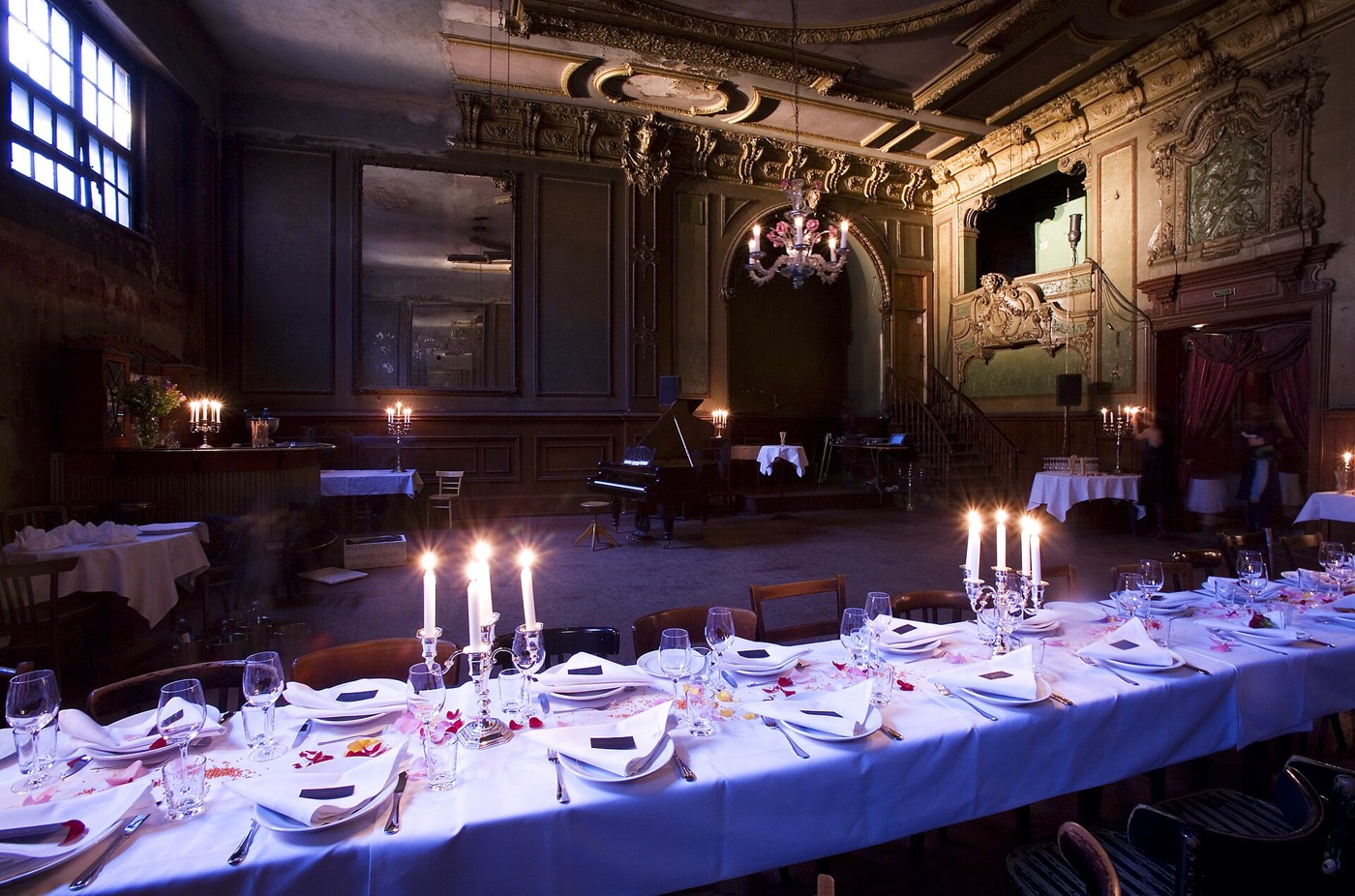
Representative real photograph of a dining table in Berlin; not a phone-free dinner hosted by a client or the author. Photo: Jorge Royan; CC BY-SA 3.0. Display copy resized. Original photograph and rights record. License terms.
