Lucaryn blog · Tarot & Intuition · November 1, 2026
Tarot Number Sequences Are Symbols, Not a Countdown
Explore numbered tarot cards as symbolic relationships and stages, without turning a sequence into a guaranteed timetable or universal numerology rule.
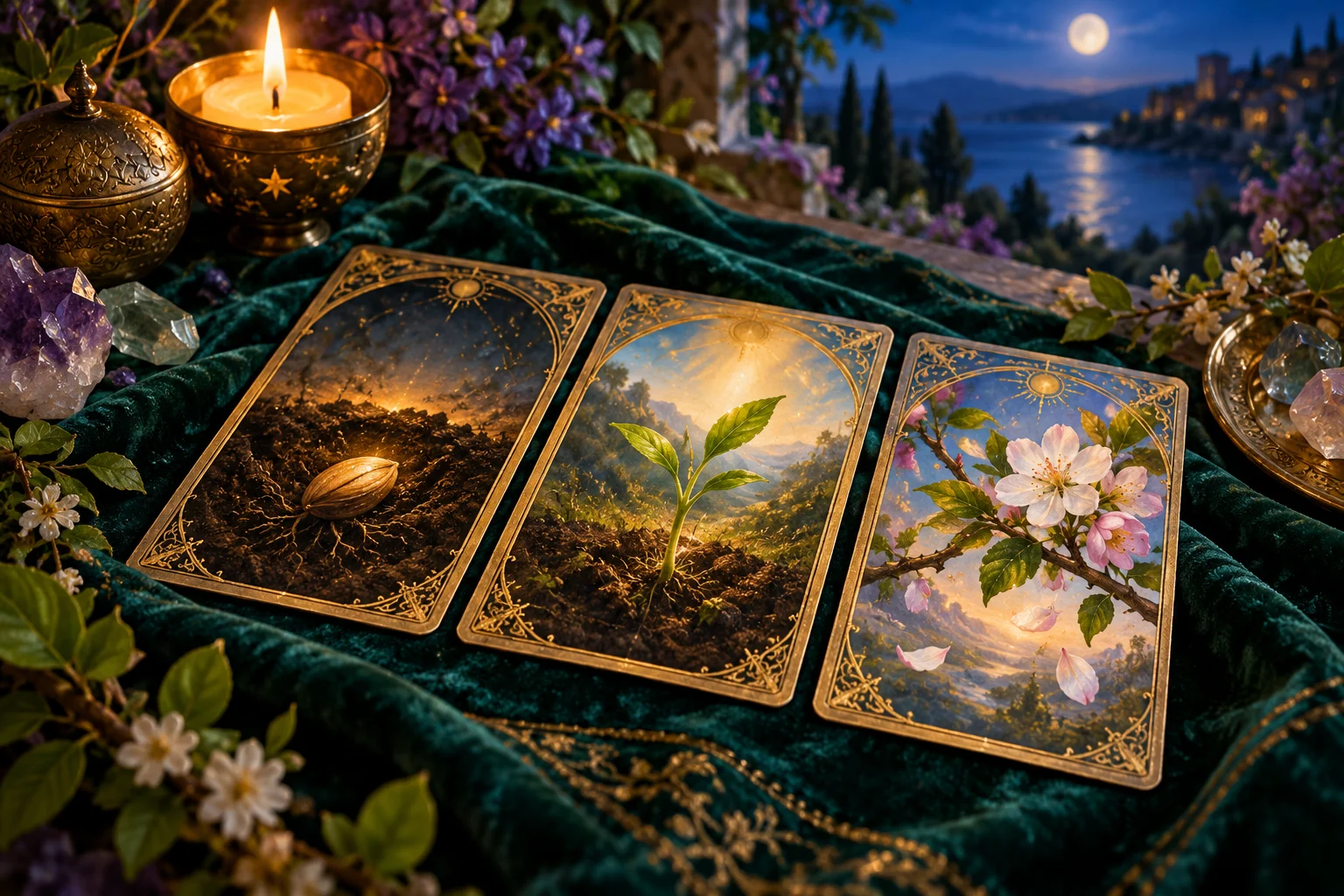
Original generated symbolic artwork; the people and spiritual scenes are illustrative, not actual advisors, clients or documented events.
A run of numbered tarot cards can invite attention to development, repetition or a shift in emphasis. It does not automatically give you a countdown. Drawing several consecutive numbers is not evidence that an event will happen in that many days, or that the cards have supplied a fixed schedule.
Tarot readers use numbers in different ways. Some draw on numerological traditions; others begin with the suit, the artwork and the card's place in a spread. A useful practice makes that approach clear rather than treating one set of associations as a law shared by every deck.
Read each card before making a sequence
Begin with the actual cards and their positions. Three numbered cards in unrelated spread positions may not describe three stages of the same process. A position about an existing resource serves a different purpose from one about a possible challenge.
Write down the question and the positions before linking the numbers. This preserves the structure of the reading. Otherwise, an appealing numerical pattern can quietly take over and answer a question the spread was never asked to address.
Keep the suit in the conversation
The same number appears across different suits, but that does not make the cards interchangeable. A reader may associate a number with a broad spiritual theme while recognizing that the suit gives it a particular expression. Look at how the deck presents the scene rather than replacing it with a single keyword.
Consult the deck's guidebook when its system is unfamiliar. Some decks revise names, imagery or numbering. Your associations can enrich the reading, but distinguish them from the creator's intended structure. That distinction makes a journal entry easier to revisit honestly.
Ask what kind of relationship the numbers suggest
A sequence might prompt you to consider a movement from beginning to elaboration, or from gathering energy to expressing it. Repetition might draw attention to a theme appearing in several parts of the spread. These are interpretive possibilities, not automatic instructions.
Test the interpretation against the whole reading. Does it connect the cards in a way that respects their positions and imagery? Or does it require ignoring a card that will not fit? A pattern becomes less useful when every inconvenient detail must disappear to preserve it.
Do not confuse order with duration
Something can have stages without revealing how long each stage lasts. Even a reading that feels sequential does not establish a calendar. If a practitioner offers a timing interpretation, ask what convention they are using and how they communicate uncertainty.
In your own practice, record the original interpretation before events unfold. Later reflection can show which themes remained useful without rewriting the spread into a perfect prediction. You can value tarot's spiritual symbolism without making it prove more than the reading supports.
Explore Lucaryn's reading guides for more ways to prepare a focused spiritual question. The independent Marketplace provides current advisor offerings if you want to discuss a deck, method or interpretation in a private session.