Lucaryn blog · Divination & Spiritual Practice · November 8, 2026
Ancestral Remembrance When Your Family Holds Different Beliefs
Create an ancestral remembrance practice that honors your own spiritual understanding while respecting relatives whose beliefs differ from yours.
Ancestral remembrance does not require every living relative to share one spiritual explanation. You might understand it as an ongoing relationship with the ancestors, while another family member values memory without believing the dead are present. A personal practice can honor the same history without asking everyone to agree about what lies beyond it.
Begin by distinguishing your spiritual practice from a claim made on behalf of the family. “This is how I remember” leaves space that “This is what our ancestors demand” closes. The distinction matters especially when family traditions include several faiths, changed beliefs or no religious practice at all.
Choose what you are honoring
An ancestor practice can focus on names, places, skills, acts of care or the fact that lives preceded yours. You do not have to portray the entire family history as harmonious. Remembering can include gratitude, unanswered questions and a clear recognition of harm.
Choose a modest intention for the session. You might remember a particular person's generosity, consider a craft passed between generations or reflect on an inherited value you wish to carry differently. Specific intentions keep remembrance from becoming an obligation to approve of everything that came before.
In traditions that understand ancestors as spiritually present, an offering may express relationship. In a personal remembrance practice, the same gesture may function symbolically. Describe the meaning you hold rather than assigning a universal rule to the object.
A private space does not need family permission to exist
A small place for your own reflection can be simple: a written name, a meaningful item you own or an empty space representing people whose names you do not know. A candle is optional; quiet attention can serve the same purpose.
Respect the ownership and privacy of family materials. A photograph sent privately is not automatically available for a public altar image or social post. Ask before displaying another person's letters, personal objects or religious items in a shared setting.
If your space is shared, agree on where personal spiritual objects can sit. This lets your practice be visible without requiring another person to participate in it.
When remembrance becomes a shared gathering
A shared activity can begin with an accessible act: telling a remembered story, preparing a familiar food or reading names aloud. Explain any spiritual element before inviting people to join. Let declining an invocation be a complete answer.
Avoid interpreting a relative's discomfort as rejection by the ancestors. Likewise, an unexpected dream or meaningful coincidence remains your experience to consider; it is not evidence that another family member must change their beliefs.
A respectful circle can hold different understandings of the same gesture. Someone may offer a prayer, someone else a memory, and another person quiet company.
Close with the life you are choosing
End by naming one quality you wish to carry forward and one assumption you do not need to carry. This keeps the practice connected to present responsibility rather than an imagined duty to repeat the past.
Ancestral spirituality can deepen belonging while leaving room for difference. The aim is an honest relationship with remembrance, not a unanimous family theology.
For related reflection, explore ancestral veneration without idealizing the past. To discuss your spiritual questions privately, find an independent reader in Lucaryn’s Marketplace.
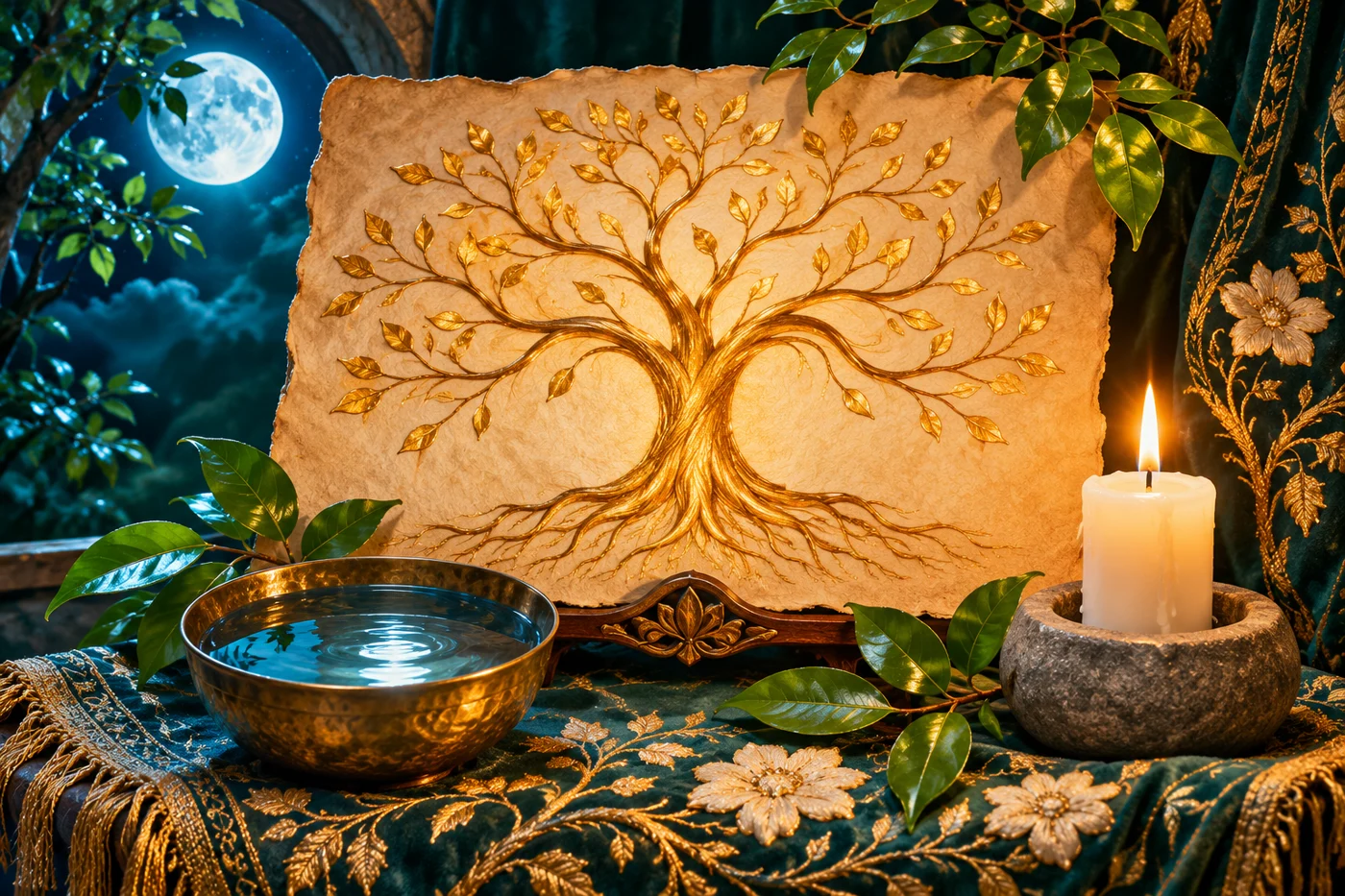
Symbolic artwork: a personal space for ancestral remembrance, with no actual family records depicted.