Lucaryn blog · Divination & Spiritual Practice · November 10, 2026
What to Do With the Extra Cards in a Tarot Deck
A blank card, artist card or bonus image need not become a mysterious omen. Learn how to decide whether an extra card belongs in your tarot practice.
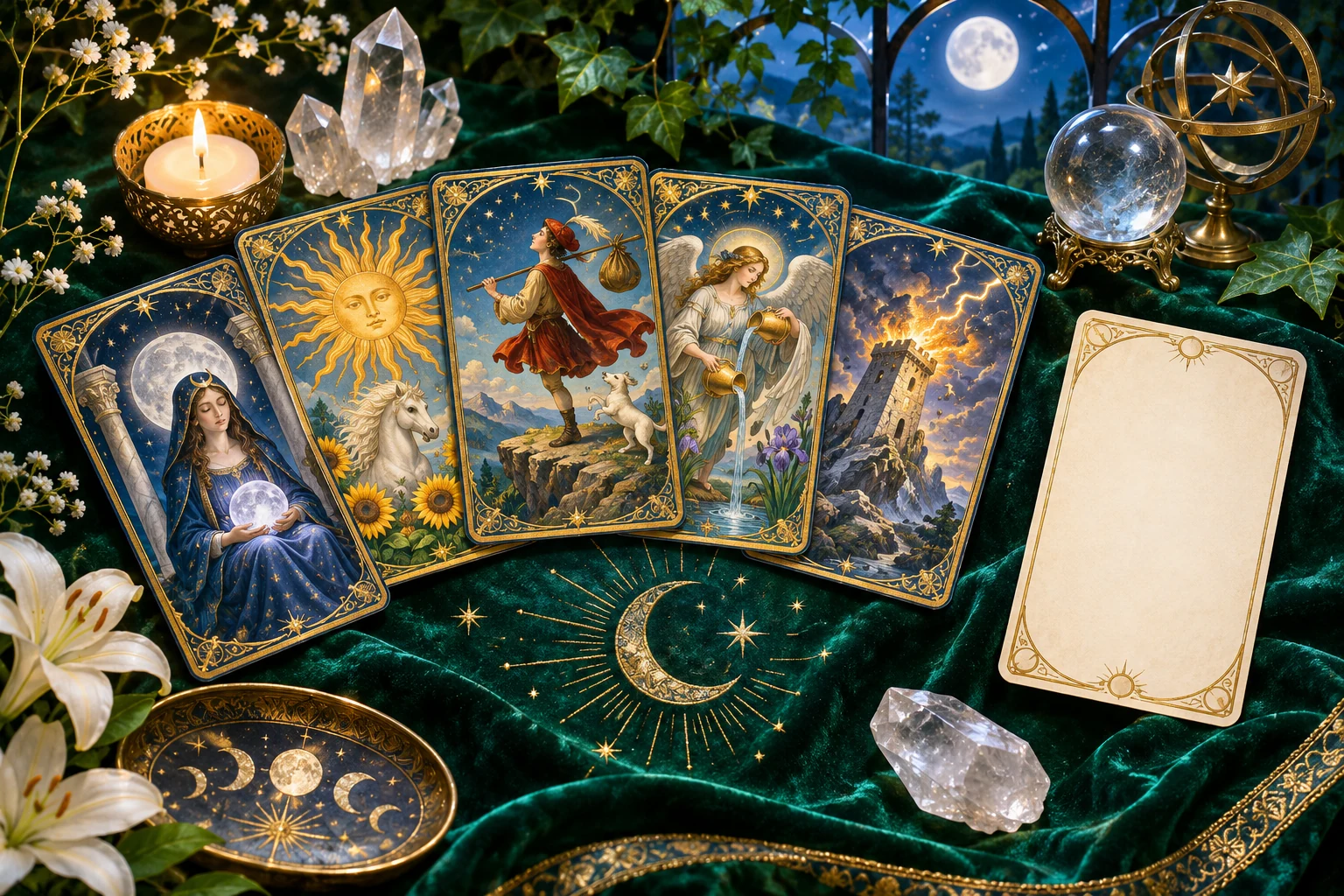
Open a tarot deck and you may find a card that sits outside the sequence you expected: a blank card, an artist’s image, an alternative design or a card carrying information about the edition. Before reading spiritual meaning into it, find out what the creator intended. The guidebook or publisher’s description is the best starting place.
An extra card does not have to enter your readings. It also does not have to be discarded. You can give it a deliberate place in your practice once you understand whether it is a reading card, a replacement, a variation or simply part of the packaging.
Begin with the deck’s own language
The familiar tarot structure contains seventy-eight cards, but individual editions may offer additional material. An alternative version of a named card serves a different purpose from a new symbolic image. A blank spare card may have no assigned divinatory meaning at all.
Check what the guidebook actually says. Keep the creator’s explanation separate from your own associations in your journal. This lets you honor the deck’s artistic world without quietly turning a personal idea into a traditional rule.
If the intention remains unclear, you can set the card aside while using the rest of the deck. You are not refusing a message by taking time to understand the object in your hands.
Choose before you shuffle
If an extra card is designed for reading, decide whether you want to include it before laying out the spread. Consistency gives its appearance a clear context. Adding it only after an answer feels uncomfortable can make the reading less coherent.
Write down what the card will mean within your practice. You might use a creator’s defined meaning, treat an alternate design as a substitute for the standard card, or reserve a bonus image for a separate reflection. Choose a purpose you can explain plainly.
Avoid silently counting two versions of the same named card as though nothing has changed. That choice alters the deck you are working with. You may still choose it, but the choice deserves to be intentional.
Give a blank card a modest role
A blank card can be visually powerful because it interrupts the expected images. If you choose to read with one, it may serve as a reminder to leave something open or to recognize the limits of the present question. Those are personal conventions, not universal tarot meanings.
Do not assign it an automatic meaning of death, danger, supernatural interference or a hidden enemy. An unprinted surface provides no basis for those claims. Its mystery can remain spacious without becoming threatening.
You could also keep it outside the shuffled deck and use it as a place marker for a question you have not yet found words for. That allows the blankness to support reflection without pretending it is an additional ancient archetype.
Let an artist card invite a different kind of attention
A bonus illustration may belong beautifully to the deck’s atmosphere while having no defined place in its divinatory system. You can use it as a journal frontispiece, a contemplative image or a visual reminder of the deck’s central theme.
Describe what you can actually see before naming a spiritual association. Then ask how the image changes your attention. A personal response can be meaningful without becoming a prediction.
Keep the physical card with the deck if you may want to revisit it. A small note explaining your decision will be more useful later than trying to remember why a card was included or removed.
Build a practice you can describe
The important question is whether your choice helps you read with clarity. A deck can hold artistic surprise without requiring every printed surface to become an omen. Allow the familiar structure and the creator’s variations to remain visible together.
If you read for someone else, explain any extra card you use. Shared understanding lets the spiritual conversation stay with the question instead of leaving the other person puzzled about an unfamiliar addition.
Explore Lucaryn’s tarot and oracle guide, or find a reader through Lucaryn’s own Marketplace.
Symbolic artwork of a tarot deck and a separate blank card; not a photograph of a particular published deck.