Lucaryn blog · Divination & Spiritual Practice · November 9, 2026
Reading the First and Last Cards in a Tarot Spread
Use the opening and closing cards to frame a tarot spread without turning its final image into a guaranteed outcome.
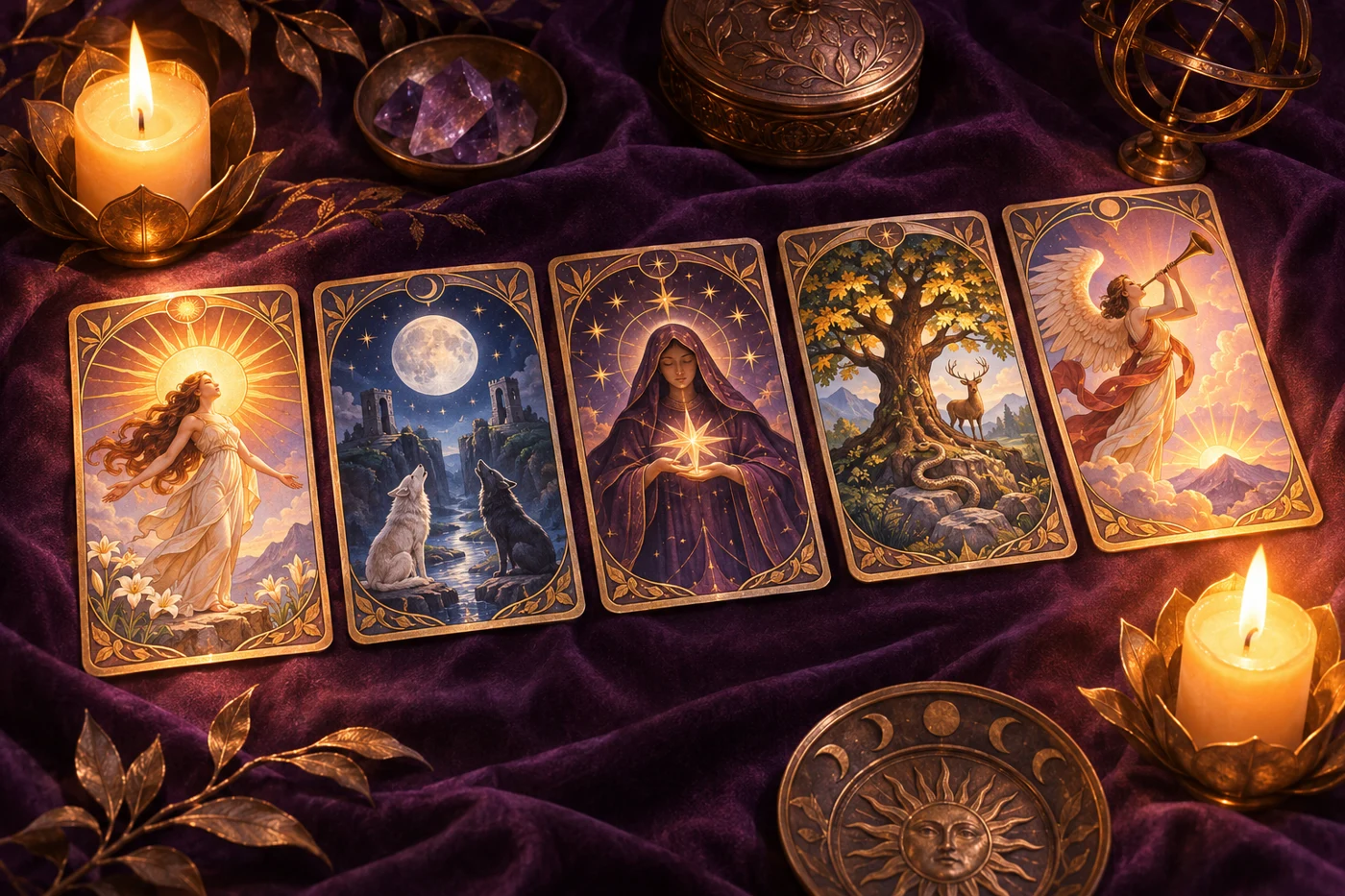
The first and last cards in a tarot spread can frame the reading, much like the opening and closing lines of a story. The first brings a question into focus. The last can offer a different view of that question. Neither has to be given more authority than the positions you chose before drawing.
A closing card can feel especially important because it is the last thing you see. If its image is dramatic, the temptation is to let it announce what happens next. Before doing that, return to the position you assigned. A card drawn for “what to carry forward” has a different job from one drawn for a possible outcome.
Let the opening card name the starting point
An opening card can help establish the atmosphere in which the question is being asked. If the spread opens with the Two of Pentacles, for example, the image may draw attention to competing demands or the effort of keeping things moving. That is a place to begin the inquiry. It does not need to characterize the entire situation.
Write a short sentence about the opening image using an active verb. “I am balancing two demands” gives you something you can compare with the other cards. The point is to have a starting phrase specific enough that the spread can change it.
Read the middle before comparing the ends
The middle cards give the reading its sequence. Suppose the middle position asks what deserves more attention and the card is the Four of Swords. Rest or a pause may change the meaning of the effort described by the opening card. The closing image will make more sense after that shift has been considered.
Now imagine the Page of Pentacles in a closing position called “what to practice.” It might draw attention toward learning one part of a task. The three cards could move from juggling, through a pause, toward one concrete practice. If you only looked at the first and last cards, you could miss what made that narrowing possible.
Return to the question before you put the cards away
Compare the verb you wrote for the opening card with one for the closing card. Ask what changed and what in the middle allowed the change. If the two ends feel similar, look for a difference in scale or point of view rather than forcing a dramatic turn.
You can use this approach in a three-card layout or a longer line of cards. It works best when each position has a clear job and the last card is allowed to answer its own question. The spread can finish with something to consider, practice or ask, without needing to finish the story of your life.
Explore Lucaryn’s tarot guide or meet an independent reader in Lucaryn’s Marketplace.
Symbolic artwork: the opening and closing positions of a tarot spread.